
Bone Marrow Transplant
Bone Marrow Transplant
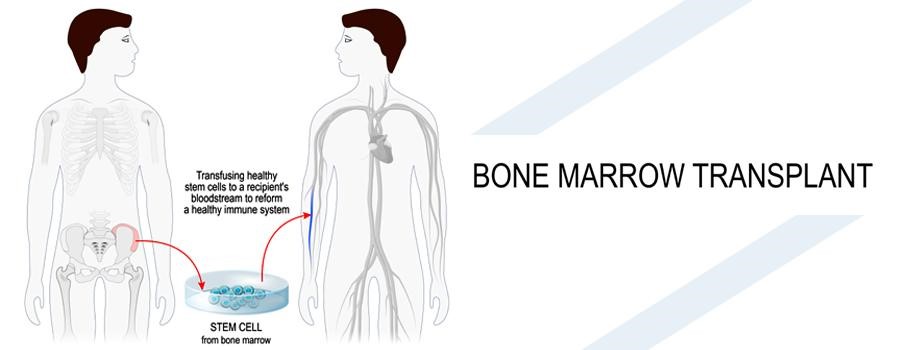
A bone marrow transplant is a medical treatment that replaces your bone marrow with healthy cells. The replacement cells can either come from your own body or from a donor.
A bone marrow transplant is also called a stem cell transplant or, more specifically, a hematopoietic stem cell transplant. Transplantation can be used to treat certain types of cancer, such as leukaemia, myeloma, and lymphoma, and other blood and immune system diseases that affect the bone marrow.
What are stem cells? What is bone marrow?
Stem cells are special cells that can make copies of themselves and change into the many different kinds of cells that your body needs. There are several kinds of stem cells, and they are found in different parts of the body at different times.Cancer and cancer treatment can damage your hematopoietic stem cells.
Hematopoietic stem cells are stem cells that turn into blood cells. Bone marrow is soft, spongy tissue in the body that contains hematopoietic stem cells. It is found in the center of most bones. Hematopoietic stem cells are also found in the blood that is moving throughout your body.
When hematopoietic stem cells are damaged, they may not become red blood cells, white blood cells, or platelets. These blood cells are very important, and each one has a different job:
Red blood cells carry oxygen throughout your body. They also take carbon dioxide to your lungs so that it can be exhaled.
White blood cells are a part of your immune system. They fight pathogens, which are the viruses and bacteria that can make you sick.
Platelets form clots to stop the bleeding.
A bone marrow/stem cell transplant is a medical procedure in which healthy stem cells are transplanted into your bone marrow or blood. This restores your body’s ability to create the red blood cells, white blood cells, and platelets it needs.
There are different types of bone marrow/stem cell transplants. The 2 main types are
Stem cells for an autologous transplant come from your own body. Sometimes, cancer is treated with high-dose, intensive chemotherapy or radiation therapy. This type of treatment can damage your stem cells and your immune system. That’s why doctors remove or rescue your stem cells from your blood or bone marrow before the cancer treatment begins.
After chemotherapy, the stem cells are returned to your body, restoring your immune system and your body’s ability to produce blood cells and fight infection. This process is also called an “auto” transplant or “stem cell rescue.”
Stem cells for an allogenic transplant come from another person, called a donor. The donor’s stem cells are given to the patient after the patient has had chemotherapy and/or radiation therapy. This is also called an ALLO transplant.
If your health care team cannot find a donor match, there are other options.
In this type of transplant, stem cells from umbilical cord blood are used. The umbilical cord connects a fetus to its mother before birth. After birth, the baby does not need it. Cancer centers around the world use cord blood. Learn more about cord blood transplants.
Cells from a parent, child, brother, or sister are not always a perfect match for a patient’s HLA type, but they are a 50% match. Doctors are using these types of transplants more often to expand the use of transplantation as an effective cancer treatment.
Often, a small tube may be placed in the patient’s chest and remain there through the transplant process. It is called a catheter. Your health care team can give you chemotherapy, other medications, and blood transfusions through a catheter. A catheter greatly reduces the amount of needles used in the skin, since patients will need regular blood tests and other treatments during a transplant.